Reading is an essential skill for all our students. We teachers like to get our students working with texts. We show our younger students how to read and in the following years encourage them to hone their skills of skimming, scanning, previewing, predicting, and so on. We expect our students, whether learning for school or work, to demonstrate comprehension of the main ideas and the details, deal with unknown lexical items or grammatical structures, and to infer other meanings or nuances of the writers.
But what about the pleasure of reading? Do we sometimes neglect the power of extensive reading and the emotional experience of following a dramatic plot or getting to know a character we grow to love (or hate)? Research consistently suggests there are many benefits to extensive reading, including the acquisition of new lexis and grammar points, improved general competence, development of learner autonomy and motivation, and a greater understanding of other cultures or viewpoints. It also creates a more balanced learning opportunity for students who are neurodivergent or deal with other personal challenges in a classroom setting, as they can read at their own pace, pause to check language, go back to an earlier chapter to check something – and all without the time or social pressures of being in a class.
Escape Readers shake up secondary students’ perception of what reading a book is about – and they create a real need for students to read. As the name suggests, they offer students an escape into an adventure full of twists and turns in which they – the reader – are the main character. From the very first chapter, the reader is at the centre of the story and an active part of the unfolding events. To move on to the next chapter, the reader is required to solve an enigma; the solution of which gives the page number of the next chapter. (The chapters in this series are presented non-sequentially, so your students will be moving backwards and forwards as the story progresses.) Each enigma is based on a puzzle or information within the chapter, but there is also an additional audio clue to offer students greater support – and you, the teacher, will also have full teaching notes, summaries, and answers. The enigma here, for example, is a puzzle based on the word ‘Manchester’. The students don’t at first know this, but all the words are made up of letters from ‘Manchester’ except one – this is the correct answer, and its number is the page number of the next chapter.
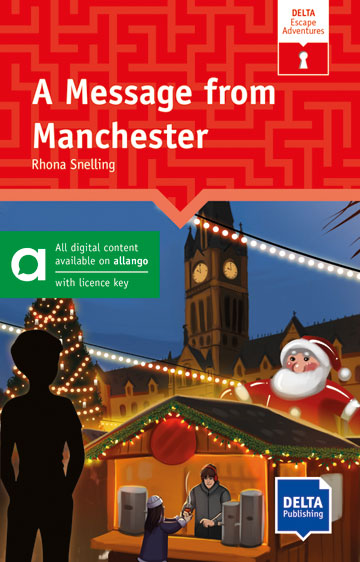
A recent tit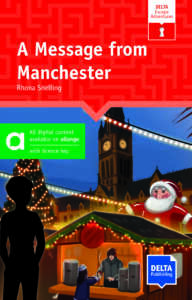 le in this series is A Message from Manchester. Set in the popular northern English city of Manchester, the main character (the reader) becomes embroiled with the activities of a gang who have been vandalising homes and businesses of particular groups of society. The reader becomes the latest victim when they realise their Christmas decorations have been deliberately destroyed by the gang. Heading into the city centre and to the Christmas markets, things start to go wrong. Through the events of the story, the reader discovers the secrets, the history, and the passion of Manchester and its diverse people. They also face some uncomfortable home truths about the nature of friendship, but observe the enduring power of community and the possibility of new friendships.
As well as helping students to see that reading can be engaging, this series dives into Landeskunde topics requiring students to use their general knowledge and cross-curricular knowledge. Readers have the chance to dive deeper into facts about the sub-topics within the story and explore their reactions to the ideas presented within it. Students are therefore able to learn more about the world and also themselves through applying critical thinking skills, which is a crucial life skill for all citizens.
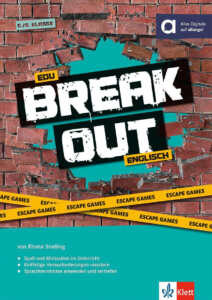
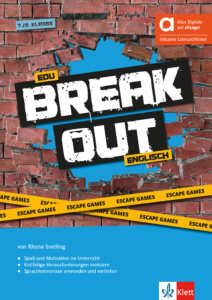
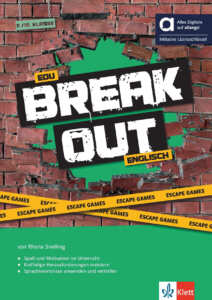
In short, escape adventures and activities help to develop more than just reading skills. Break Out!: a series of photocopiable escape games at three levels. Each level contains 20 escape games which are based on a language point and a topic, such as indigenous languages, literature, or Halloween. Like the Escape Readers, these games are based around solving language-related enigmas but, unlike the Escape Readers, students will be working together. In fact, these games activity promote the four Cs: communication, collaboration, creativity, and critical thinking. They allow you and your students to playfully break out of the everyday classroom routine, whilst upholding the pedagogical and linguistic integrity of your classes. Faced with challenges and enigmas, students engage with the text because they need clues to unlock their next task.